

The Blog

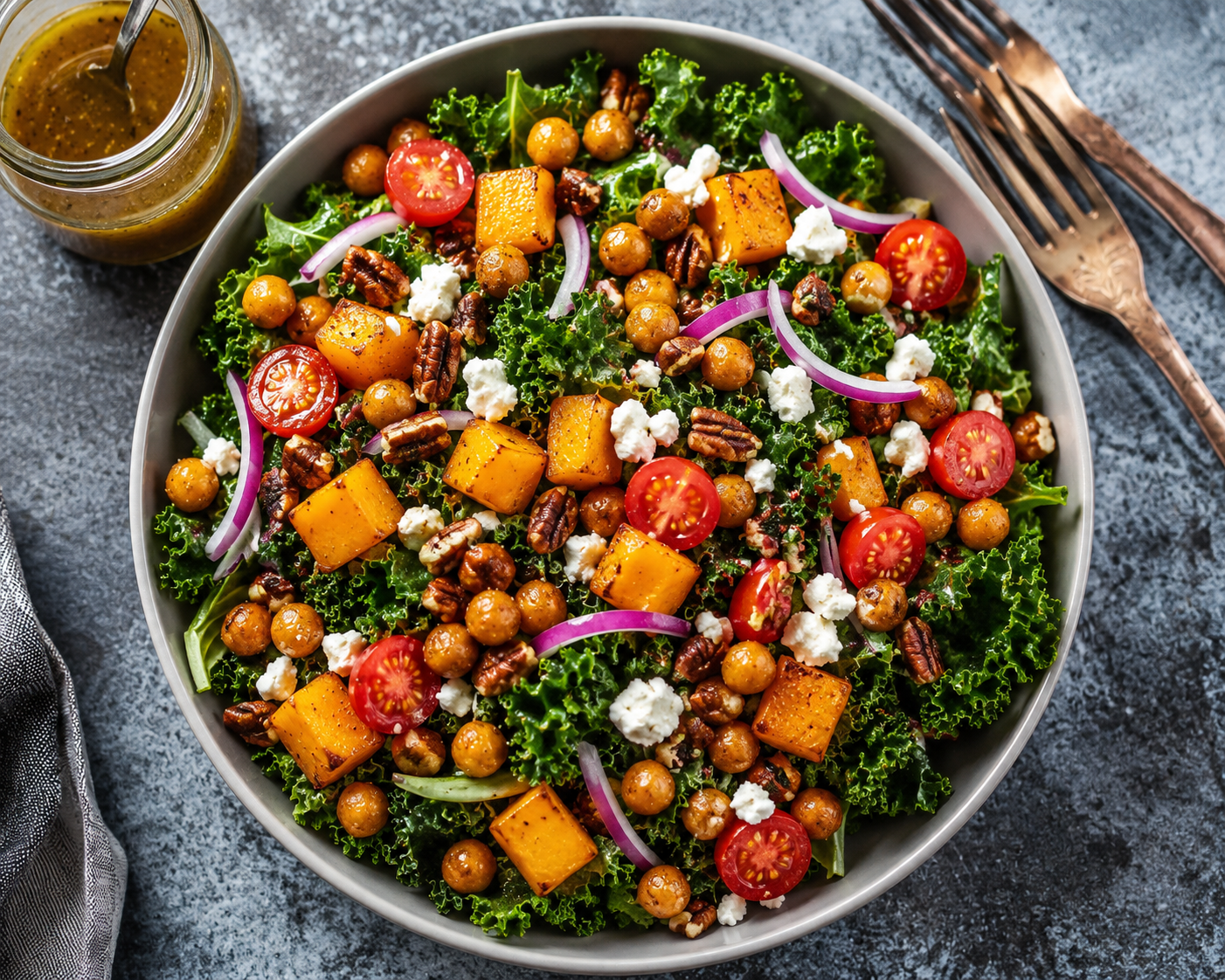
Roasted Butternut Squash & Chickpea Harvest Salad
September 2, 2026
Who says salads have to be cold, boring—or leave you hungry an hour later?
This Roasted Butternut Squash & Chickpea Harvest Salad is the perfect bridge between summer and fall. It’s still fresh and colorful thanks to crisp greens and juicy cherry tomatoes, but warm roasted butternut squash, crispy chickpeas, pecans and a Maple Dijon Vinaigrette give it just enough cozy fall flavor.
Even better? Most of the work happens on one sheet pan.
Use fresh pre-cut butternut squash or grab a bag from the freezer, open a can of chickpeas, and let your oven do the rest.
Why You’ll Love This Recipe
This salad is:
- Packed with colorful plants
- Rich in fiber
- Made with a nourishing source of carbohydrate
- Full of healthy fats
- Easy to prep ahead
- Naturally vegetarian
- Easy to make dairy-free
- Perfect for lunch or dinner
- Simple to turn into a higher-protein meal
And that warm squash + creamy goat cheese + crunchy pecans combination? So good.
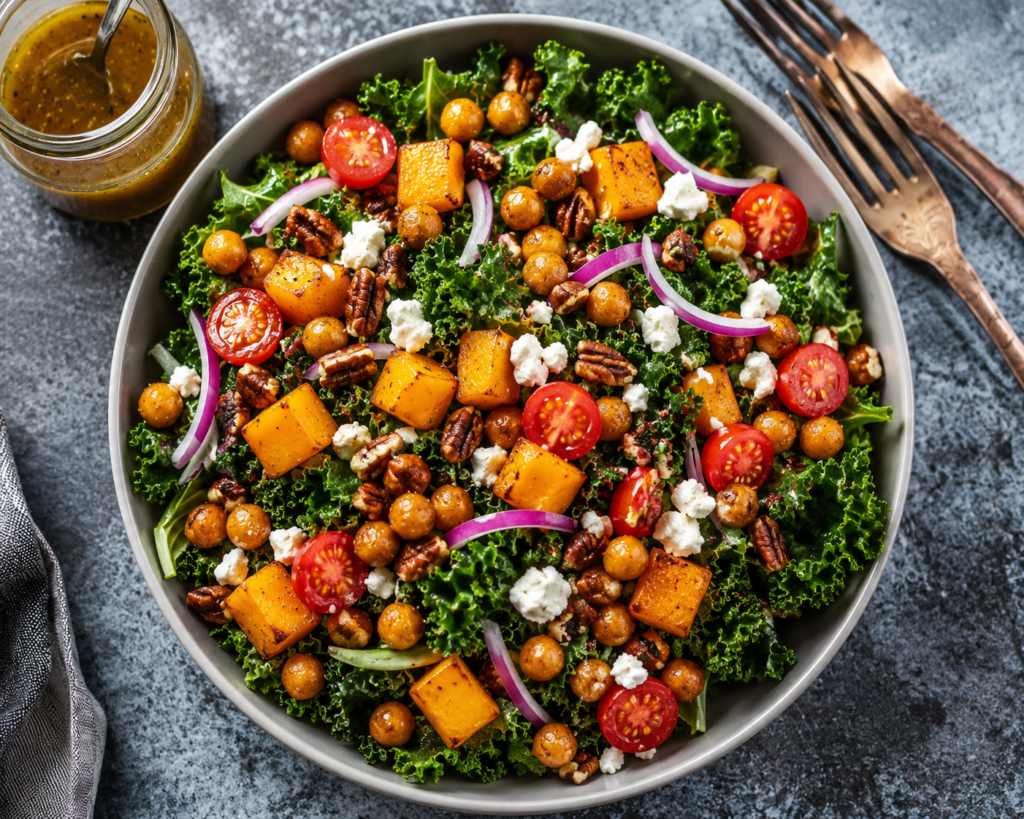
Roasted Butternut Squash & Chickpea Harvest Salad
Yield: 4 servings
Prep time: 10 minutes
Cook time: approximately 25–30 minutes
Ingredients
For the Salad
- 5–6 cups chopped kale or greens of choice
- 3 cups cubed butternut squash, fresh or frozen
- 1 (15-ounce) can chickpeas, drained, rinsed and patted dry
- 1 cup cherry tomatoes, halved
- ¼ small red onion, thinly sliced
- ½ cup crumbled goat cheese
- ⅓ cup chopped pecans
- 1 tablespoon extra-virgin olive oil
- ½ teaspoon garlic powder
- ½ teaspoon smoked paprika
- ¼ teaspoon sea salt
- Black pepper, to taste
Maple Dijon Vinaigrette
- ¼ cup extra-virgin olive oil
- 2 tablespoons apple cider vinegar
- 1 tablespoon Dijon mustard
- 1–2 teaspoons pure maple syrup
- ½ teaspoon garlic powder
- Pinch of sea salt
- Freshly ground black pepper, to taste
Directions
Roast the Squash & Chickpeas
Preheat oven to 425°F.
Add the butternut squash and chickpeas to a large sheet pan.
Drizzle with 1 tablespoon olive oil and season with garlic powder, smoked paprika, salt and pepper. Toss until evenly coated.
Spread everything into a single layer, leaving some space between the ingredients so they roast rather than steam.
Roast for approximately 25–30 minutes, tossing halfway through, until the squash is tender and lightly caramelized and the chickpeas are golden.
Using frozen butternut squash? There’s no need to thaw it first. Place it directly onto the sheet pan and allow a few additional minutes of cooking time if necessary.
During the last 3–5 minutes, add the pecans to the sheet pan if you’d like them lightly toasted. Keep an eye on them—they can burn quickly!
Make the Maple Dijon Vinaigrette
Add the olive oil, apple cider vinegar, Dijon mustard, maple syrup, garlic powder, salt and pepper to a small jar.
Cover and shake until emulsified.
Start with 1 teaspoon maple syrup, taste, and add the second teaspoon if you’d like a slightly sweeter dressing.
Assemble the Salad
Place the kale or greens into a large serving bowl.
If using kale, drizzle it with a tiny amount of olive oil and add a pinch of salt. Massage the kale with clean hands for 1–2 minutes until it begins to soften.
Add the cherry tomatoes and red onion.
Top with the warm roasted butternut squash and chickpeas, goat cheese and pecans.
Drizzle with Maple Dijon Vinaigrette and toss gently before serving.
Nutrition Information
Serving size: approximately ¼ of recipe, including dressing
| Nutrient | Per Serving |
| Calories | ~460 |
| Carbohydrates | ~45 g |
| Protein | ~13 g |
| Fat | ~28 g |
| Fiber | ~10 g |
| Added Sugar | ~1–2 g |
Nutrition information is an estimate and will vary based on the exact greens, brands, amount of dressing used and other ingredient substitutions.
Let’s Talk About Butternut Squash
Carbohydrates don’t have to be something we automatically remove from our plates.
Butternut squash is a perfect example of a nutrient-dense carbohydrate that brings much more to a meal than carbohydrates alone.
Its beautiful orange color comes largely from carotenoids, including beta-carotene, which the body can convert into vitamin A. Butternut squash also provides vitamin C, potassium and fiber.
Fiber helps support digestion and contributes to a more satisfying meal, while carbohydrates provide your body with an important source of energy.
Rather than asking, “How can I eliminate the carbs?” we often encourage our patients to ask:
“How can I build a more balanced plate around them?”
This salad does exactly that.
Why This Salad Works for Blood Sugar Balance
The butternut squash isn’t sitting on the plate by itself.
We’re combining it with:
Fiber from chickpeas, kale, squash and vegetables
Healthy fats from olive oil and pecans
Protein from chickpeas and goat cheese
Color and plant variety from several different vegetables
Combining carbohydrates with protein, fat and fiber can slow digestion and generally produces a different glucose response than eating a carbohydrate-rich food by itself.
It’s a great example of why supporting blood sugar isn’t simply about eating as few carbohydrates as possible.
It’s about how you build the whole meal.
Make It a Meal
As written, this makes a beautiful vegetarian salad.
If you’d like to turn it into a more substantial entrée, particularly if you’re working toward a higher protein intake, add your favorite protein.
Try:
- Grilled chicken
- Salmon
- Shrimp
- Turkey
- Tofu or tempeh
- Additional chickpeas
If you’re meal prepping, keep the dressing separate and add it just before serving.
Make It Your Own
Don’t love kale? You don’t have to use it.
Try mixed greens, baby spinach, arugula, romaine or whatever greens you already have in your refrigerator.
You can also swap:
- Goat cheese → feta
- Pecans → walnuts or pumpkin seeds
- Butternut squash → roasted sweet potato
- Chickpeas → white beans
- Cherry tomatoes → chopped apple or pear as the weather gets cooler
That’s one of our favorite things about recipes like this: they’re a framework, not a rulebook.
A Final Note
This is what we mean when we talk about making nutrition practical.
You don’t need an elaborate recipe or hours of meal prep to put together a nourishing meal.
Sometimes it’s a bag of frozen butternut squash, a can of chickpeas, whatever greens are in your refrigerator and a really good homemade dressing.
Simple. Balanced. Nourishing. And actually delicious.
If you make this one, we’d love to hear how you make it your own!
Amanda


Be the first to comment